Why Is Alcohol Harmful to Your Body?
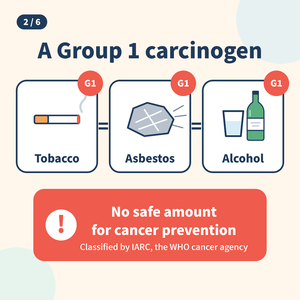
Alcohol is a carcinogen
The International Agency for Research on Cancer (IARC), part of the World Health Organization, classifies alcoholic drinks as a Group 1 carcinogen, the same group as tobacco and asbestos. The current international view is that, when it comes to preventing cancer, there is no amount of alcohol that can be called "safe."
How your body breaks down alcohol
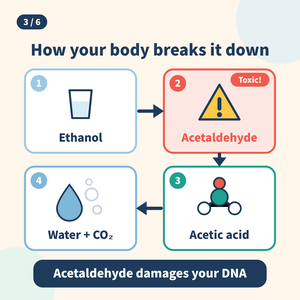
Ethanol, the main ingredient in alcoholic drinks, is broken down mostly in the liver. It is first turned into a substance called acetaldehyde. This is then broken down into acetic acid, which finally leaves the body as water and carbon dioxide.
The problem is the in-between product, acetaldehyde. It is a toxic substance that causes hangover symptoms such as a flushed face, headache, nausea and a racing heart. It sticks to the genetic material in your cells (DNA) and damages it, and it also gets in the way of repairing that damage. When this damage builds up again and again, it lays the groundwork for cancer.
Take extra care if your face turns red
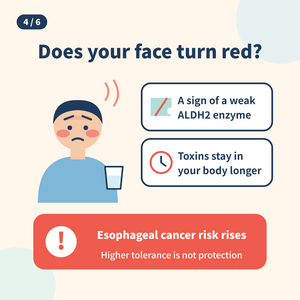
Many East Asians, including Koreans, are born with a weak version of the enzyme that breaks down acetaldehyde (ALDH2). People with this trait turn red after even a small amount of alcohol. This is a sign that the toxic substance is staying in the body longer. If they keep drinking anyway, their risk of esophageal cancer rises sharply. People also say "you can build up your tolerance," but a higher tolerance does not mean you are protected from the toxin. It may simply mean that your exposure to it is adding up.
Other harmful effects
More free radicals: Breaking down alcohol increases free radicals, which "rust" your cells and damage cell membranes and DNA.
Nutrient deficiencies: Alcohol interferes with how your body absorbs and uses folate, B vitamins, zinc and other nutrients.
Irritation of the lining, and a dangerous mix with smoking: Alcohol touches the lining of the mouth and esophagus directly, which makes it easier for cancer-causing substances from tobacco to be absorbed. Drinking and smoking together multiplies the risk.
Hormone changes: In women, alcohol raises estrogen levels, which is linked to a higher risk of breast cancer.
Chronic inflammation: Fatty liver can progress to alcoholic hepatitis, cirrhosis and liver cancer.
Bacteria in the mouth and gut: These bacteria also turn alcohol into acetaldehyde. Poor oral hygiene increases the exposure inside the mouth.
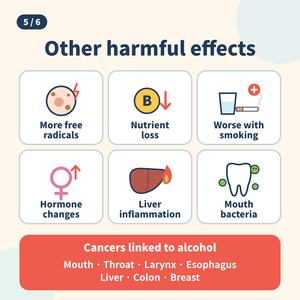
Cancers linked to alcohol
The main ones are cancers of the mouth, pharynx (throat), larynx (voice box), esophagus, liver, colon and rectum, and breast.
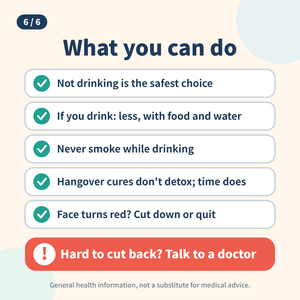
What you can do
The safest choice is not to drink.
If you do drink, drink less often and in smaller amounts, don't drink on an empty stomach, and have water along with it.
Make sure to avoid the habit of smoking while drinking.
If your face turns red after even a little alcohol, cut down as much as you can or stop drinking.
Hangover remedies and coffee do not get rid of the toxin. Your liver breaks alcohol down at a fixed pace, so time is the only sure cure.
If you find it hard to control your drinking, don't struggle alone. Talk to a doctor or other health professional.