
How do muscles move, and why do they weaken? The hidden cause of muscle weakness and pain
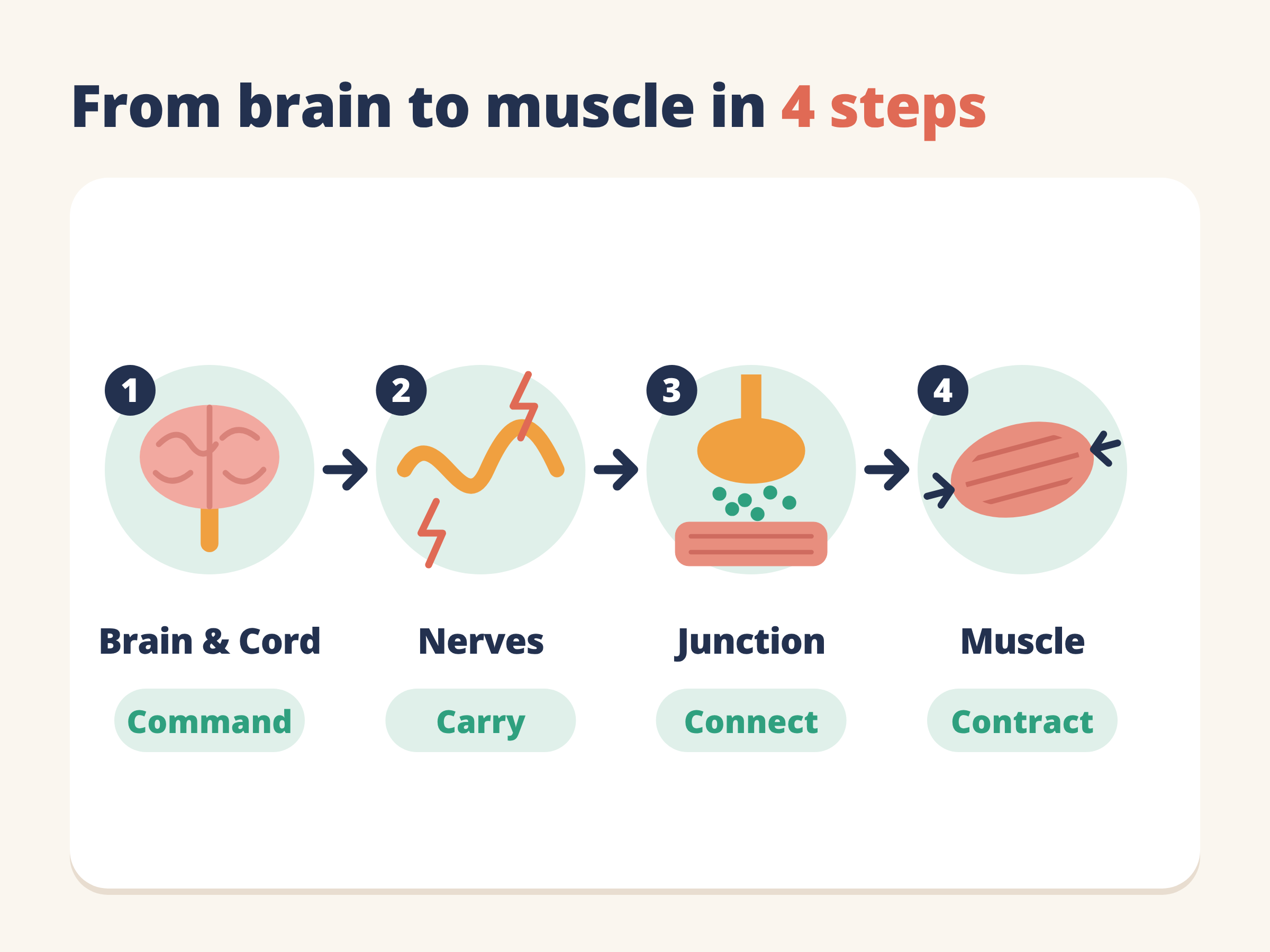
Even a simple movement like raising your arm requires a precise chain of connections from the brain to the muscle. This chain has four stages: the central nervous system, the peripheral nervous system, the neuromuscular junction, and the muscle.
A problem at any one of them can cause weakness, and weakness can lead to pain.
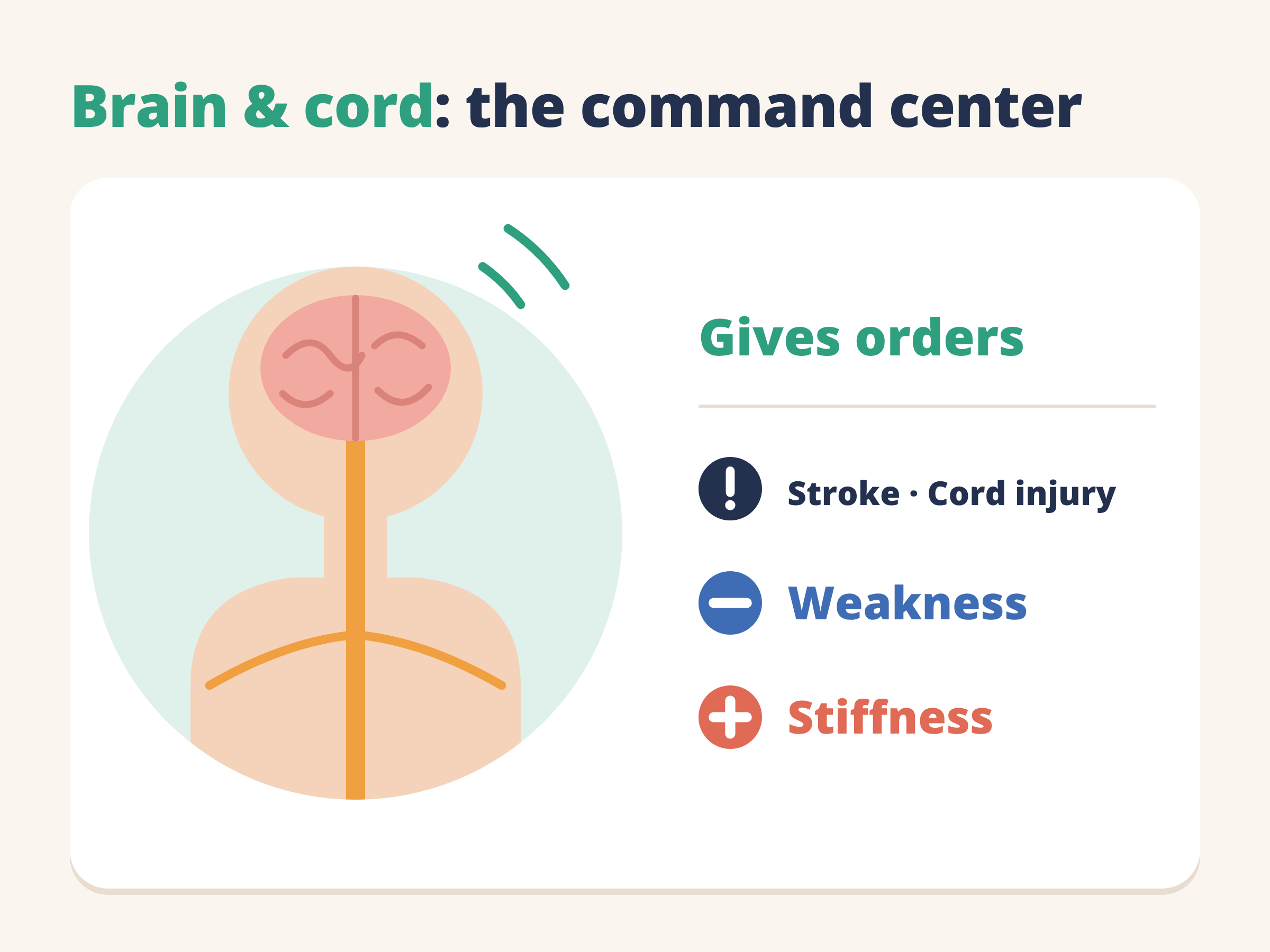
Central nervous system: the command center
[Normal] The motor cortex of the brain creates the command "move", and the signal travels down the spinal cord. The cerebellum and basal ganglia fine-tune the strength and timing so movements are smooth and accurate, and the spinal cord helps keep muscle tone at the right level. It also sends inhibitory signals so a muscle is not pulled further than it should be.
[Pathology] Stroke, brain injury, spinal cord injury, or Parkinson's disease can weaken the command, causing weakness or paralysis. When the inhibitory control is lost too, muscles become stiff and tight (spasticity), and tight muscles keep pulling on joints and tendons, causing pain. Long periods of disuse then add secondary muscle loss.
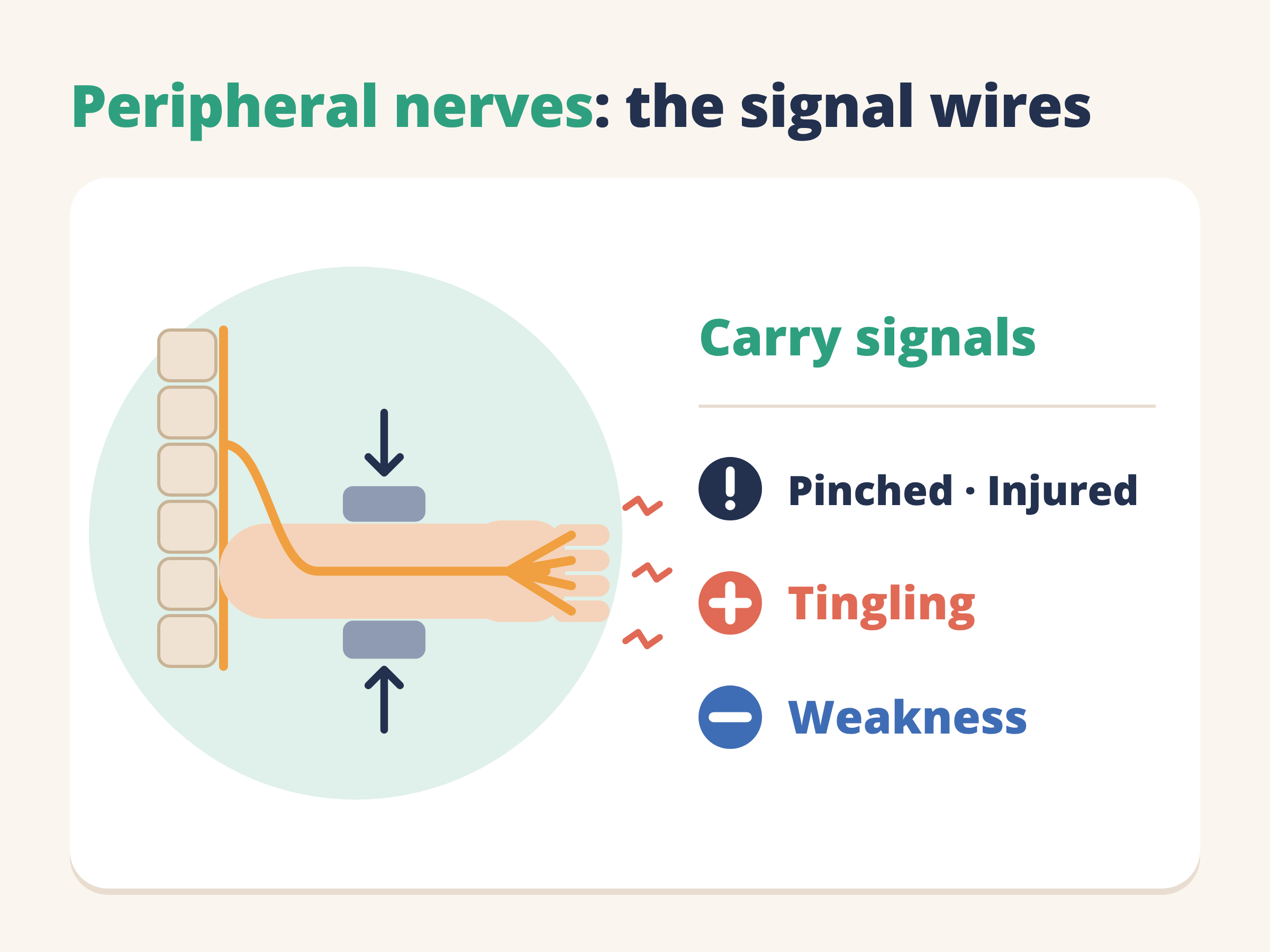
Peripheral nervous system: the wires that deliver the command
[Normal] Motor nerves leave the spinal cord and run along the arms and legs to the muscles. Like electrical wires, they are wrapped in insulation (myelin) so signals travel fast and accurately. Nerves also send nourishing signals that keep muscles healthy.
[Pathology] A herniated disc or spinal stenosis can compress a nerve root, and carpal tunnel syndrome compresses a nerve in a narrow passage, weakening the signal. Diabetes, alcohol, vitamin deficiency, and chemotherapy can damage the nerve itself. The result is weakness, tingling, shooting pain, and numbness, and when the nerve's nourishing supply is cut off, the muscle wastes away.
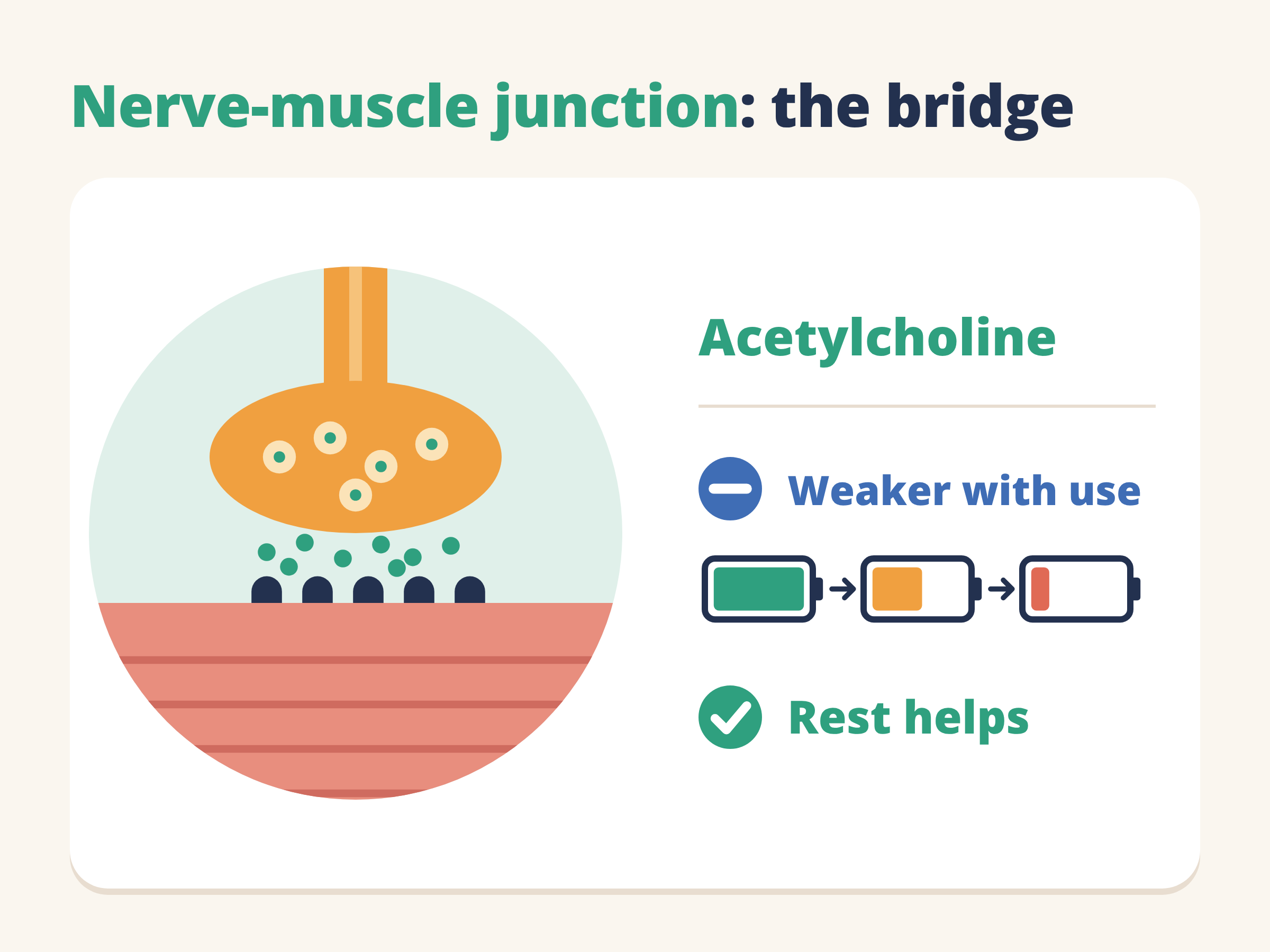
Neuromuscular junction: the bridge between nerve and muscle
[Normal] There is a tiny gap between the nerve ending and the muscle. When a signal arrives, the nerve releases a chemical called acetylcholine, which binds to receptors on the muscle surface and passes on the order to contract. Enzymes quickly break down leftover acetylcholine so the junction is ready for the next signal.
[Pathology] In myasthenia gravis, the immune system attacks these receptors, so signals cannot cross properly. Weakness grows with use, improves with rest, and is often worse in the evening. Drooping eyelids and double vision are common. Some toxins and medications can also interfere at this stage.
Muscle: the engine that produces force
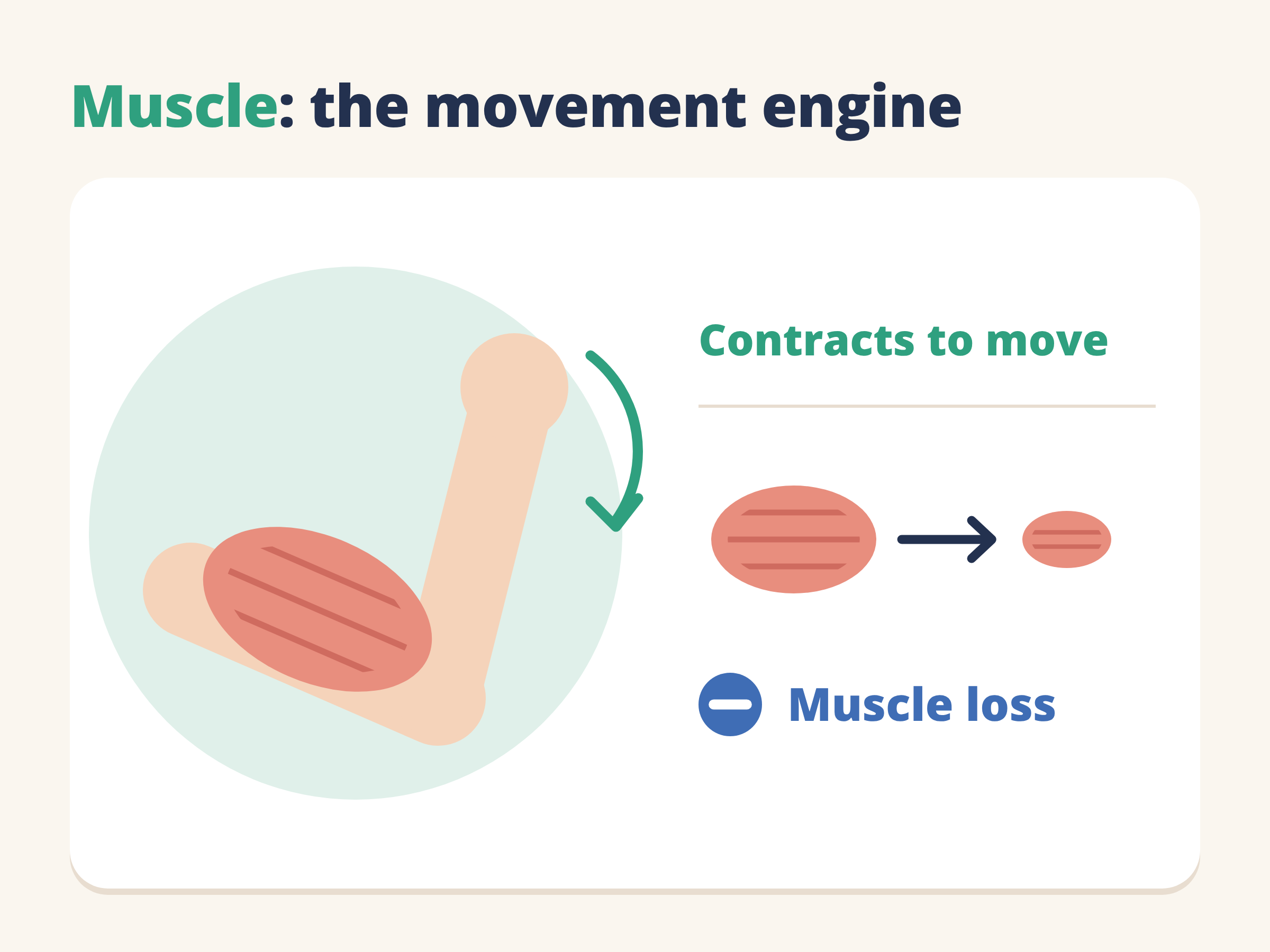
[Normal] When the signal arrives, calcium is released inside the muscle cell, and the protein filaments actin and myosin slide past each other and contract. This needs energy (ATP), and when calcium is taken back up, the muscle relaxes. Muscle is adaptable tissue: it grows with use and shrinks with disuse.
[Pathology] With aging, muscle fibers shrink in number and size (sarcopenia), and inactivity, poor nutrition (especially protein), and hormonal changes speed this up. Myositis, muscular dystrophy, and muscle damage from drugs such as statins injure the muscle fibers themselves. When muscles weaken, joints, tendons, and ligaments take over the load, leading to shoulder, back, and knee pain in a vicious cycle.
Why weakness becomes pain
A weakened muscle cannot hold a joint firmly, so other areas are overused, and compensating movements build up into chronic pain. Therefore, if you have pain together with weakness somewhere in your body, do not look at the pain alone. Look for any muscle that has become weak, and find out at which stage, central nervous system, peripheral nervous system, neuromuscular junction, or muscle, the problem began.
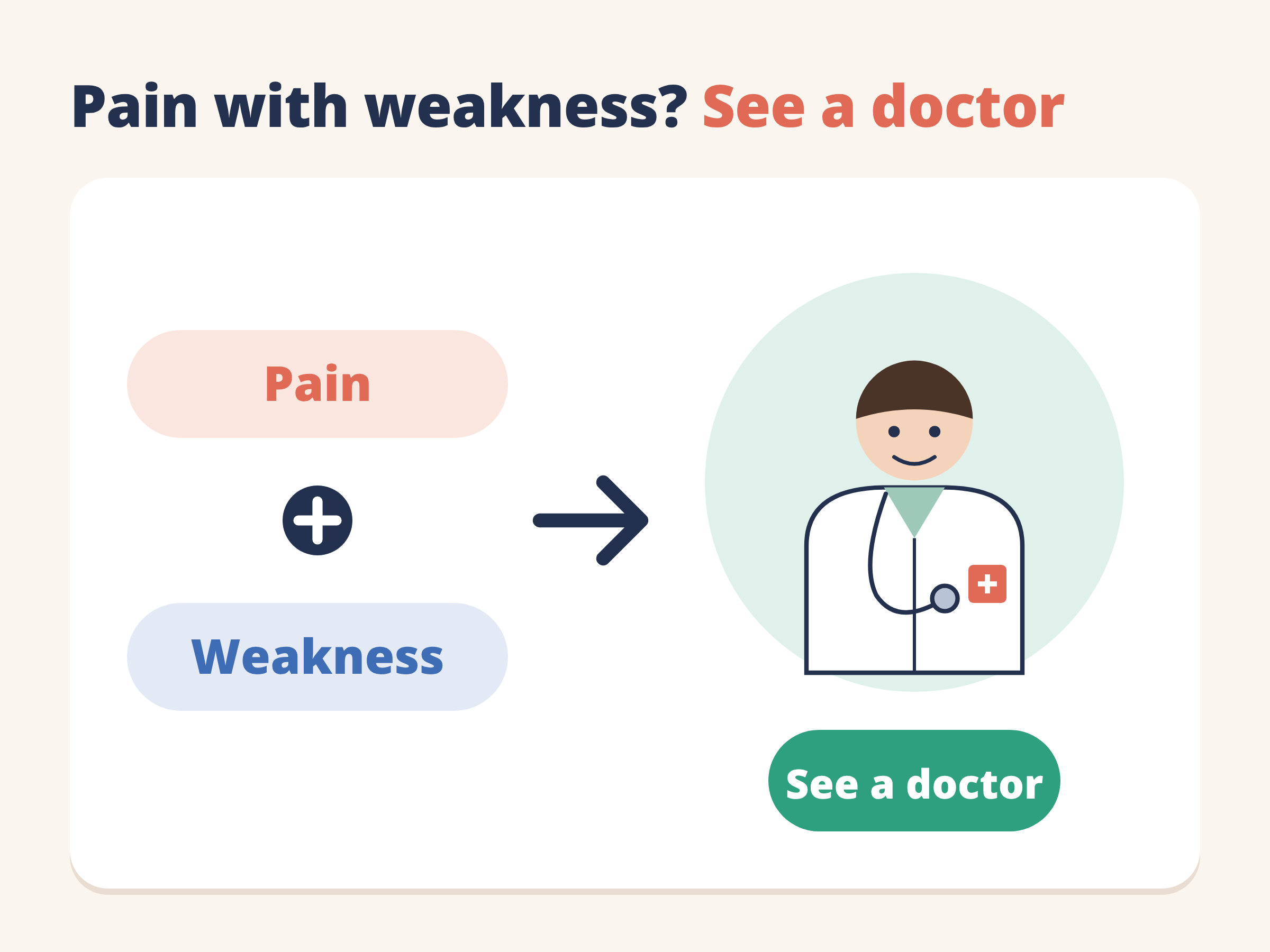
When to see a doctor If you have weakness that continues for no clear reason, tingling or sensory changes along with it, drooping eyelids, or weakness that worsens with use and improves with rest, please see a doctor to find out which stage is affected.