
How musculoskeletal pain develops and is treated: a look at muscle contraction and relaxation
Hello. I am Dr. Wonsik Ahn, director of ANSim Pain Clinic.
I would like to explain how musculoskeletal pain develops and how it is treated, in relation to muscle contraction and relaxation.
The importance of securing muscle length (relaxation exercises are needed)
In childhood, bones, muscles, and ligaments are normal, but if for some reason they are not used or are overused, the muscles become shorter (shortening). Even at rest, calcium is released and the muscle contracts little by little. A certain length is maintained only when the opposing antagonist muscle contracts and causes the agonist muscle to relax.
Meanwhile, after a lot of exercise, if there is not enough energy for proper relaxation, the muscles shorten even more rapidly. When a muscle shortens for whatever reason, compensatory deformation of bones or ligaments occurs. This deformation may appear as a horn-like growth on the bone, a bone spur(osteophyte), or it may show up as symptoms of limited range of motion (ROM). As muscle shortening gradually worsens and skeletal deformation becomes severe, nerves are compressed or bone spurs and similar structures narrow the space, and the symptoms get worse.

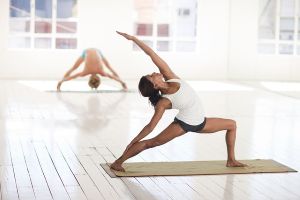
Therefore, for fundamental treatment, securing muscle length is important. Relaxation exercises—commonly what are called yoga or Seonmudo—are relaxation exercises that relax most of the muscles throughout the body and therefore help with the fundamental treatment of musculoskeletal pain.
When there is muscle atrophy: start with strength training
In some severe cases, people have used their muscles so little that muscle atrophy has developed. In this case, they must first start with muscle rehabilitation exercises. This is because there is no muscle to relax. Because there is hardly any muscle at all, the joints cannot be moved. Therefore, first do muscle rehabilitation exercises, and only after increasing muscle mass to some degree should muscle relaxation exercises be done. Only when the basic erector spinae muscles are present is there a foundation for straightening a bent back. Therefore, we provide education while appropriately balancing strength exercises and relaxation exercises, and in addition, education on diet, breathing techniques, sleep, and mental health must also be provided to achieve fundamental prevention of recurrence.

Balance training
In addition, for patients who have followed along well for 3–4 months or more, we additionally teach balance. The concept of musculoskeletal balance can be understood by considering, for example, how both legs contract and relax at the right moments when walking. Likewise, when bending and extending the arm, the contraction of the agonist muscle and the relaxation of the antagonist muscle are balanced at the right moment and at the right speed. As another example, when standing on one foot, the calf muscle at the back of the leg and the peroneal muscles on the side of the calf must be in balance. This balance is governed by the "cerebellum." However, when deformation from muscle shortening persists for a long time, the timing or order of the muscles—such as which muscle contracts first and which contracts later— that maintain "balance" breaks down, leading to falls or muscle cramps.
In conclusion, if you learn muscle strengthening, muscle relaxation, and balance (cerebellum) well and practice them repeatedly, the musculoskeletal system is normalized, and furthermore you can become free from musculoskeletal pain.