Cancer and pain
Hello, I am Wonsik Ahn, director of ANSim Pain Clinic.
Whatever the cause of a "malignant tumor (cancer)," if a mass (lump) can be felt or if it compresses a nerve and causes pain, people are likely to visit a hospital, so the chance of finding the cancer relatively increases.

‘Cancer’ has a low probability of occurring, but it must be found early for fundamental treatment to be possible, so you should pay attention to and check even mild symptoms.
Therefore, when you have pain, keep ‘cancer’ in mind and undergo diagnostic tests.
To find out whether there is a problem with the bones, an X-ray is needed
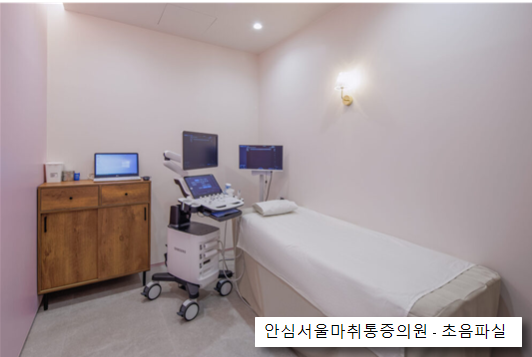
To find out whether there is a problem with soft tissues such as muscles, tendons, ligaments, blood vessels, and nerves, an ultrasound is needed
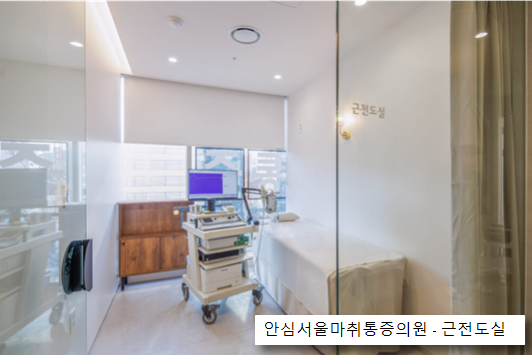
When pain involves nerve tissue, the location of the cause may differ even with similar symptoms, so nerve conduction/electromyography tests are needed
Also, to examine the systemic distribution, blood hormone tests and radioisotope scans are sometimes performed; radioisotope tests require special facilities and equipment, so they are performed at university hospitals
To examine the condition of internal organs in detail, CT or MRI is sometimes performed
In particular, ultrasound is good for detecting malignant tumors such as lymphoma early, and the chance of detection is higher when the nerve and vascular tissues along the pathway that could cause the symptoms are all examined, together with the area where symptoms appear. Because the area to be examined is wide, the examination inevitably often takes a long time.
In particular, venous examinations use gravity, so they are performed with the patient standing, and an assistant may press by hand.
Meanwhile, the abdominal cavity has plenty of space, so there may or may not be symptoms.
Arms, legs, and face: the specific location of the cause of pain appearing in these areas may differ. That is, even if your foot hurts, the cause may be in various places, such as the foot itself, the ankle, the calf, the knee, the thigh, the back of the knee, the lower lumbar spine, the cervical spine, or the brain. To differentiate these pain sites, nerve conduction and electromyography tests are performed.
In conclusion, to find out the cause of pain, X-rays, ultrasound, nerve conduction/electromyography, blood tests, and so on are performed, and when an abnormality is found, the patient is referred to a larger hospital for CT/MRI and radioisotope scans.
ANSim Pain Clinic is fully equipped for blood tests, X-ray, ultrasound, and nerve conduction/electromyography. Through these diagnostic tests, we aim to check for the root cause in pain patients.