
It won't heal, it keeps coming back: why treating the cause of pain matters
Hello, I am Wonsik Ahn, director of ANSim Pain Clinic.
Every patient who comes to the clinic wants to get better quickly. So they want to know why the pain occurred, and are curious about the principles behind the treatment for that cause.
When repeated treatment is needed, they want to know how many times it must be repeated. They also hope it will not recur, and want to know how to improve their lifestyle to prevent recurrence.
So what treatment methods are actually available for pain?
Representative treatment methods include medication, physical therapy, nerve blocks, neurolysis, surgery, and more. The usual approach is to choose the appropriate method among these according to the patient's condition.
In this clinical setting, the key is probably the cause of the pain. I think that in most cases, the pain was caused by a specific factor, yet without removing that cause, patients ask, “Why won't it heal?” or “Why does it keep coming back?”
Then, what causes pain? Broadly, we can consider the following four categories: (1) structural problems, (2) nerve problems, (3) systemic/internal medical problems, and (4) amplification and chronification factors. Let us look at these four causes of pain in detail.
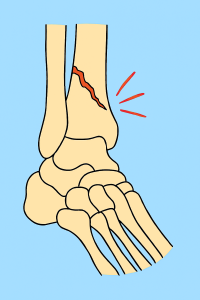
1) “Structural problems” such as bones, joints, muscles, and discs (mechanical causes)
This is the most common category. When the body's structures (muscles, ligaments, tendons, joints, spine and discs, etc.) are damaged or overloaded, pain occurs.
For example, this includes a stretched ligament from a twist (sprain), a bruise/fracture from a fall, tendinitis or enthesitis (tennis elbow, etc.) from repetitive use, and myofascial pain syndrome from sitting for long periods or tension.
In addition, there are many cases where degenerative changes cause arthritis, where in the spine, a disc (intervertebral disc) irritates the area around the nerves, or where joint structures, as in spinal stenosis, facet joint pain, or sacroiliac joint problems, produce pain.
A feature of this category is that it usually hurts more in certain postures or movements, tends to ease with rest, or conversely becomes stiffer if you do not move for a long time.
2) “Pain from sensitized nerves” (neuropathic causes)
When the nerves themselves, which normally transmit signals, are compressed, damaged, or inflamed and become sensitized, pain can feel “tingling,” “numb and prickling,” or “burning.”
Typical examples include radiating pain extending to the arms or legs due to irritation of nerve roots in the neck or lower back (radiculopathy), and peripheral nerve entrapment/compression, in which a nerve is compressed at a specific site, as in carpal tunnel syndrome, is also common.
There are also cases, such as postherpetic neuralgia and diabetic peripheral neuropathy, where nerves are damaged and the pain persists for a long time. Although rare, complex regional pain syndrome, in which pain becomes excessively severe after trauma or surgery and is accompanied by swelling and even skin changes, also belongs to this category.
3) “Systemic/internal medical causes” (pain arising from problems inside the body)
In some cases, the starting point of pain is not the musculoskeletal system but a systemic problem involving the blood vessels, internal organs, infection, or tumors.
For example, there may be vascular pain (claudication), in which insufficient blood flow causes the calves to tighten when walking and improve with rest, and there may be referred pain, in which pain arising in internal organs, as with gallstones, urinary stones, or gastrointestinal problems, is felt in another area.
In addition, relatively serious causes such as infection (joint infection, osteomyelitis, etc.) or tumors (both benign and malignant) may first present as pain. For this category, it is important to look not only at the pattern of pain but also at accompanying signs such as fever, rapid weight loss, pain that wakes you at night, or pain that gradually worsens.
4) “Factors that amplify pain and make it last” (amplification and chronification factors)
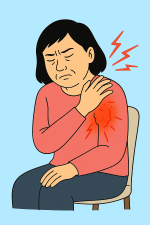
The last category is the one most people misunderstand. It is not that you hurt “because there is no cause”; rather, there are cases where the system that regulates pain becomes hypersensitive (central sensitization), so pain easily grows stronger and lasts longer. Fibromyalgia and some chronic low back pain/headaches can show this pattern.
When factors such as lack of sleep, chronic stress, anxiety/depression, and excessive tension are added, pain becomes more sensitive and recovery can be slower. Rather than dismissing this category as “a problem of the mind,” it is better to understand it as an amplifier that operates very concretely in the process of pain becoming chronic.
In summary,
when pain does not heal well or keeps recurring, before simply treating “harder,” (1) structural problems, (2) nerve problems, (3) systemic/internal medical problems, (4) amplification and chronification factors: the key is to check these four step by step and go through the process of finding the “real cause(s)”. Only when the cause is properly identified can treatment be shortened and recurrence reduced.