Life Runs on a "Flow of Information": From DNA to Metabolites, and Disease
The roughly 37 trillion cells in our body all carry the same blueprint: DNA.
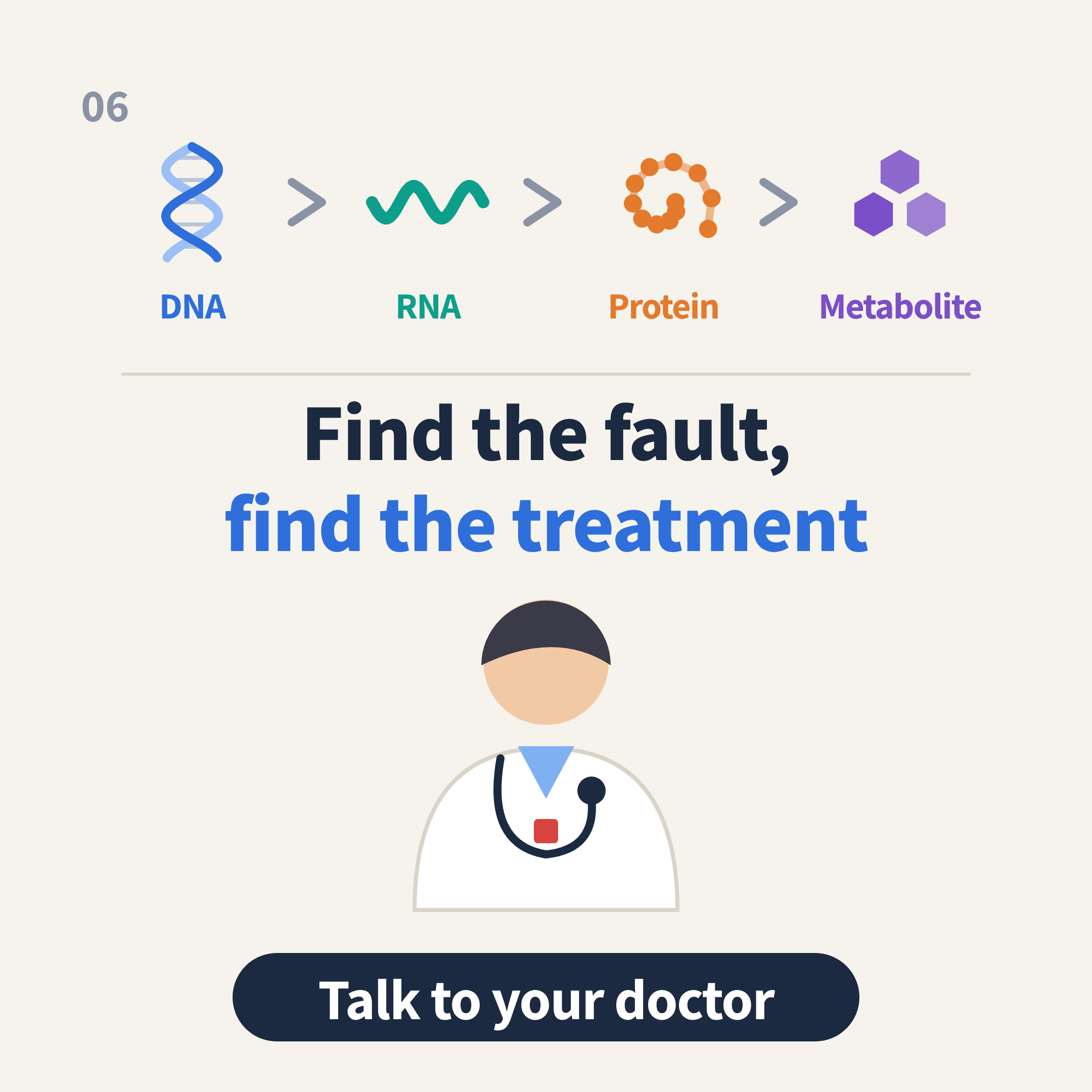
But a blueprint alone does not build a house. You need to copy the blueprint, use the copy to make bricks, build the house from those bricks, and then live in it. Life works in a similar way, with information flowing in order from DNA → RNA → protein → metabolites.
When something goes wrong at any step along this flow, the body becomes ill.
1. DNA: The Blueprint of Life
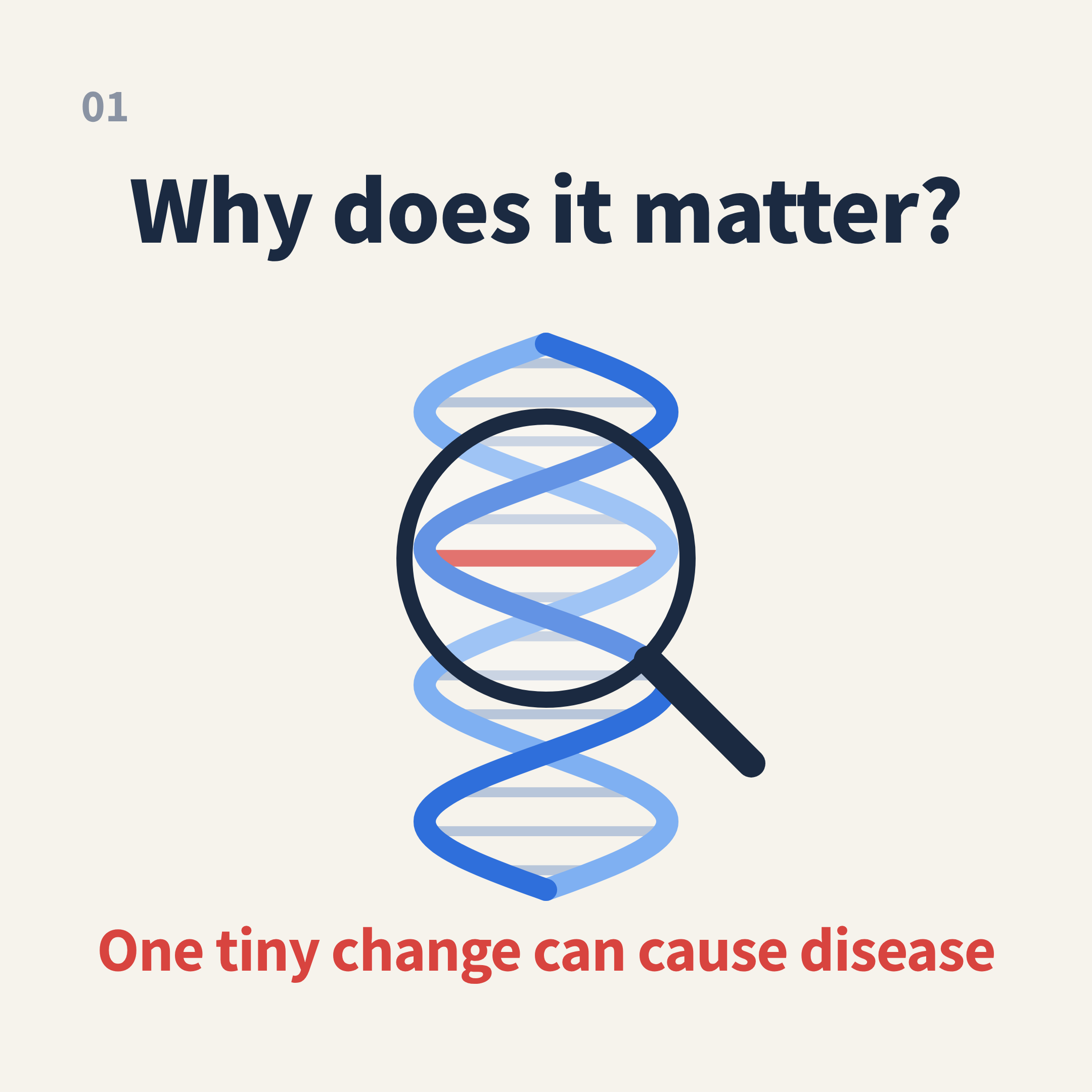
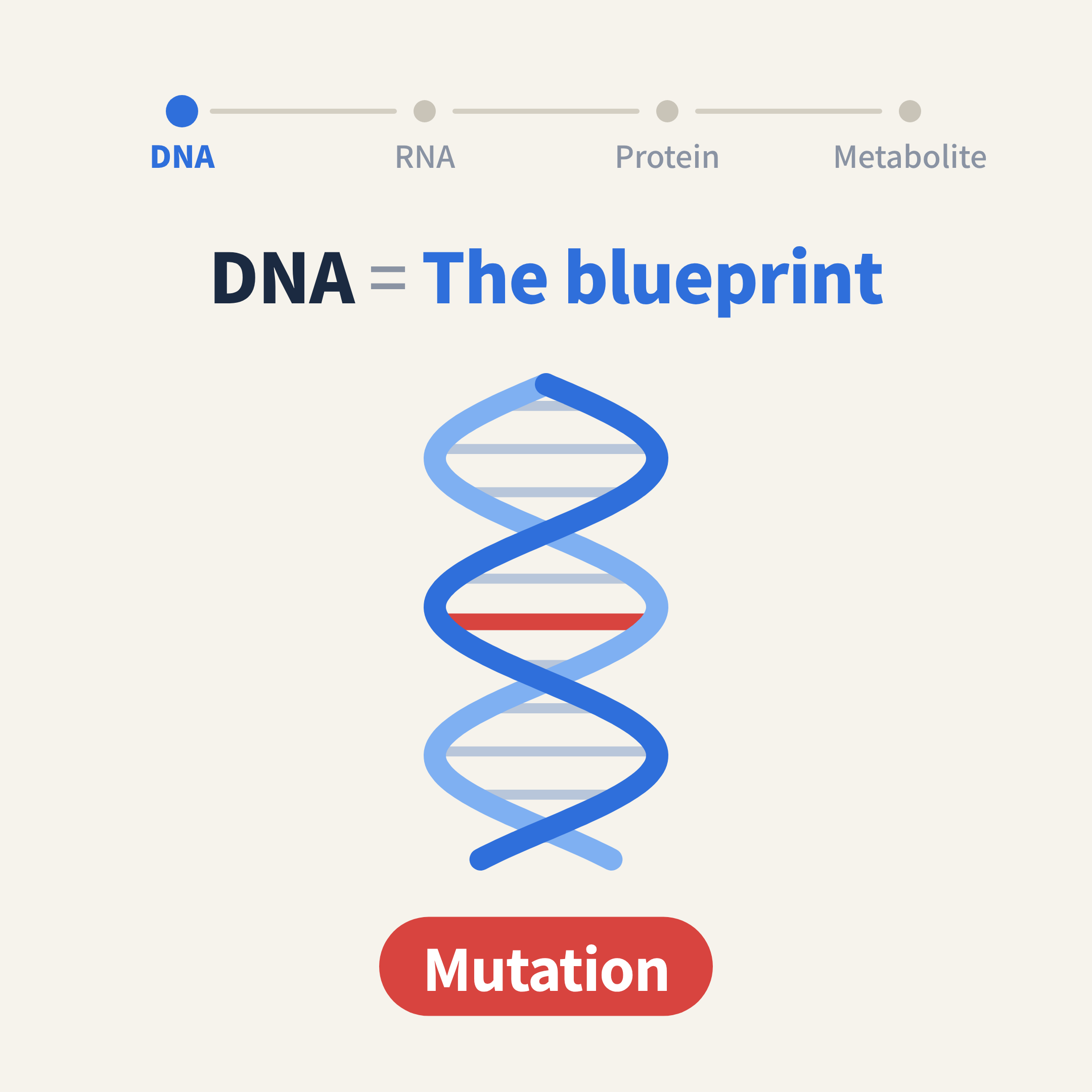
DNA is a long sentence written in just four letters: A, T, G, and C. Human DNA is about 3 billion letters long and contains about 20,000 "genes." You can think of a gene as a paragraph that describes how to make a particular protein.
Sometimes one of these letters is changed, deleted, or added. This is called a mutation. For example, sickle cell anemia is caused by a change in just one letter of the hemoglobin gene. In other cases, a whole extra chromosome is present; Down syndrome, in which there are three copies of chromosome 21, is a well-known example. Because the blueprint itself is wrong, every step that follows is affected.
2. RNA: The Working Copy of the Blueprint
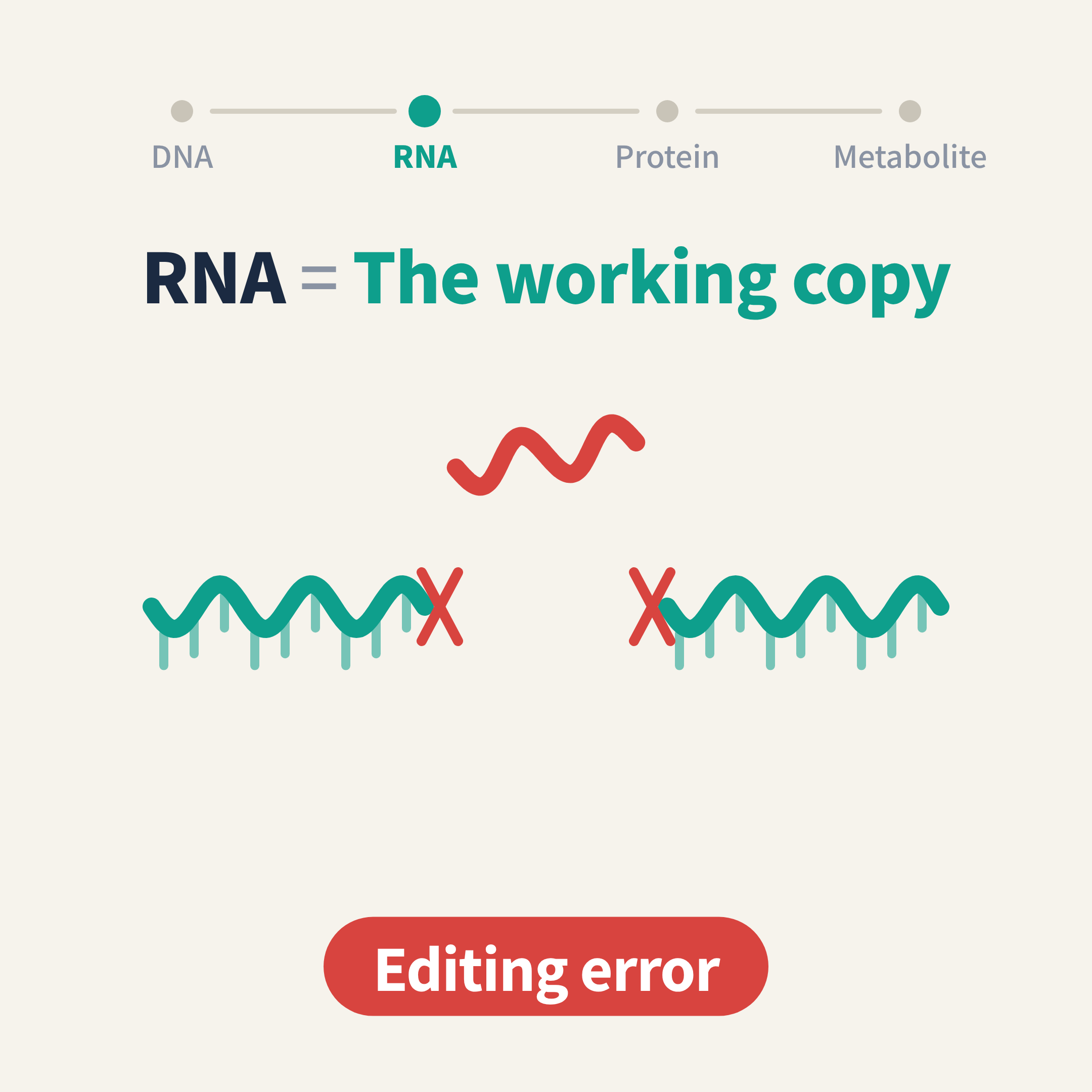
DNA is kept safely inside a vault called the cell nucleus. To get work done, the cell copies only the part it needs and takes it out. This copy is RNA (messenger RNA), and the copying process is called "transcription." During copying, unneeded parts are cut out and the rest is joined back together, a step called "editing" (splicing).
If something goes wrong at this step, a faulty copy can be made even when the blueprint is normal. Editing errors may leave out important parts, or too many or too few copies may be made. Spinal muscular atrophy is closely linked to an RNA editing problem, and RNA medicines that correct this editing are now in real clinical use. When the switches that turn genes on and off break down, needed proteins may not be made, or cell growth that should stop may continue, which can lead to cancer.
3. Protein: The Worker That Does the Job
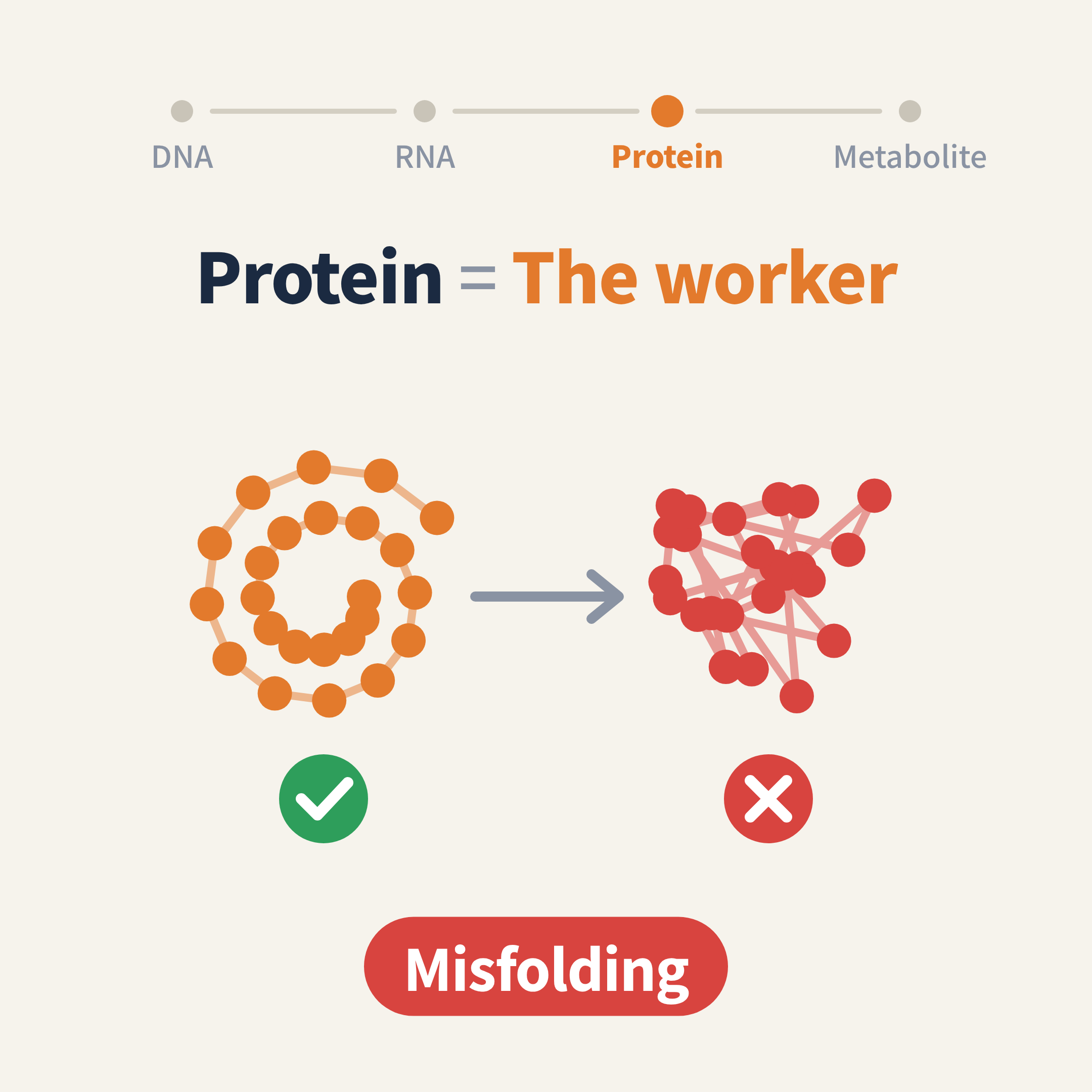
The information in RNA is read in a cellular factory called the "ribosome" and turned into protein. Proteins are the workers that actually do the jobs in our body. They move muscles, carry oxygen, fight off invaders, and act as enzymes that help chemical reactions happen.
After a protein is made, it must fold into exactly the right shape to work. If the shape is wrong, the protein cannot do its job, or it may clump together and harm the cell. Cystic fibrosis is a disease in which a salt-channel protein does not fold properly, so thick, sticky mucus builds up in the lungs and digestive system. In other diseases, such as Alzheimer's disease and Parkinson's disease, misfolded proteins build up in the brain.
4. Metabolites: The Products of Life's Activity
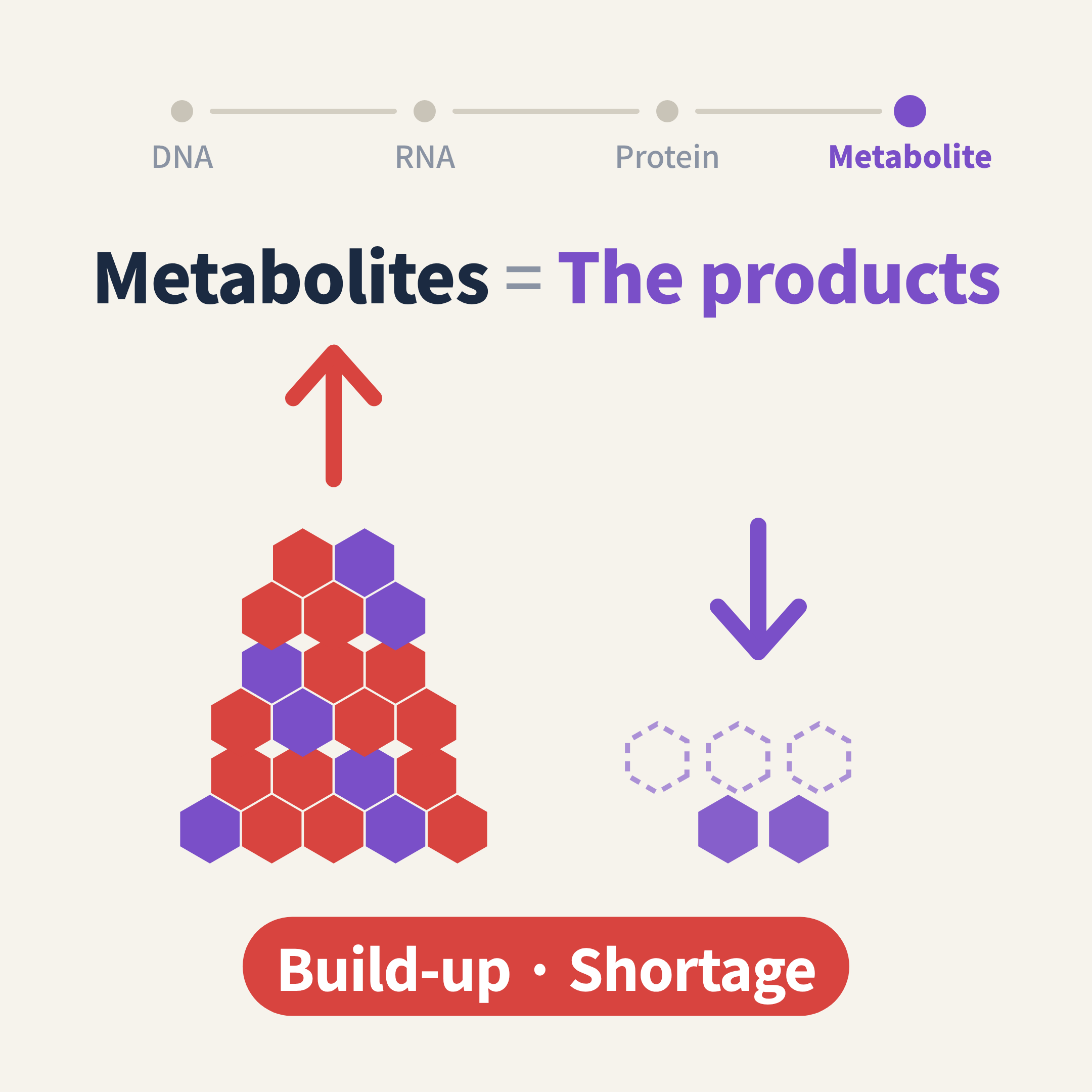
Enzyme proteins break down substances from food, produce energy, and build the materials the body needs. The small molecules created in these processes, such as glucose, amino acids, fatty acids, and cholesterol, are called metabolites. Metabolites are the most direct indicators of how our body is doing; the blood sugar and cholesterol levels in a health checkup are exactly these.
When a particular enzyme is missing, some substances cannot be broken down and build up, while others fall short. Phenylketonuria (PKU) is a disease in which the enzyme that breaks down the amino acid phenylalanine is missing, so this substance builds up and harms brain development. Fortunately, when it is found early through newborn screening and managed with a special diet, children can grow up normally. In this way, problems at the metabolic step can often be controlled with diet or medicine, even if the underlying gene cannot be changed.
In Closing: One Flow, Many Points of Failure
A change in a single small letter of DNA can alter RNA, then alter protein, and finally upset the balance of metabolites, appearing as symptoms. Understanding a genetic disease means finding where in this flow the fault occurred. And once we know where the fault is, the path to treatment becomes clearer. Gene therapy that fixes the blueprint, RNA therapy that corrects the copy, enzyme replacement therapy that supplies a missing protein, and dietary therapy that reduces a building-up substance each target a different step in this flow.